

When choosing outdoor lighting, the colour of the light makes a bigger difference than you might think.
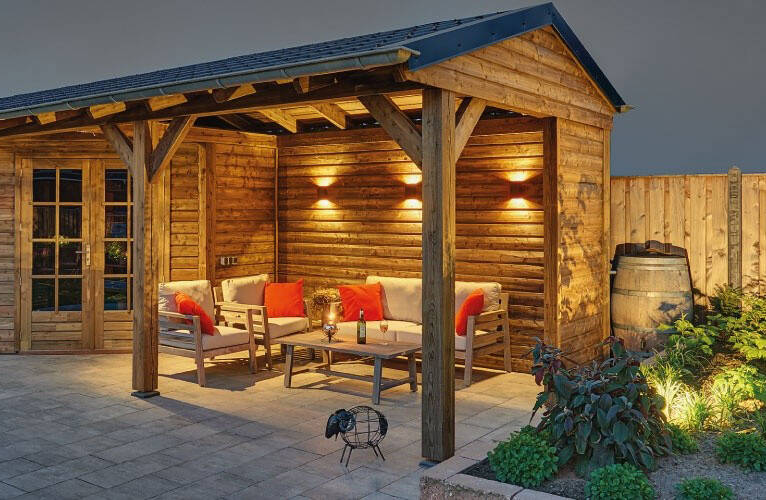
The right colour temperature can completely change the atmosphere of a garden, terrace, pool area or outdoor space. A warm light can create a relaxed and luxurious feeling, while a cooler light is often better suited to practical and functional lighting.
But what do 2200K, 2700K, 3000K and 4000K actually mean?
And which colour temperature is best for your garden?
What does Kelvin mean in outdoor lighting?
Light colour is measured in Kelvin, written as K.
The lower the Kelvin value, the warmer and more golden the light appears. The higher the Kelvin value, the cooler and whiter the light becomes.
Here is a simple overview.
2200K, extra warm light
2200K produces a very warm, almost candlelight-like glow.
It works beautifully when you want a cosy and intimate atmosphere. It can be a great choice for decorative lighting, seating areas and spaces where ambience is more important than visibility.
2700K, warm and atmospheric
2700K is one of the most popular choices for outdoor lighting.
It creates a warm, natural and welcoming atmosphere without becoming too yellow. It works particularly well in gardens with plants, trees, natural stone, wood and other warm materials.
For many outdoor spaces, 2700K offers an excellent balance between atmosphere and visibility.
This is also why many of our SmartGardenXL outdoor lights use a warm colour temperature around 2700K.
Discover our range of [2700K outdoor lighting] and find the right light for your garden.
3000K, warm but more neutral
3000K still feels warm, but appears slightly whiter and cleaner than 2700K.
It can be a good option when you want your garden to feel modern and bright while still maintaining a warm atmosphere.
3000K is often suitable for contemporary gardens, outdoor walls, pathways and areas where you want a little more visual clarity.
4000K, cooler and more functional
4000K produces a much cooler, more neutral white light.
It is often used for functional applications where visibility is more important than creating a relaxed atmosphere.
For example, 4000K can be useful around garages, work areas, storage areas or entrances where you want clear visibility.
For a relaxing garden environment, however, cooler light can sometimes feel less natural.
So, which colour temperature is best for a garden?
There is no single colour temperature that is right for every garden.
It depends on the atmosphere you want to create and what you are lighting.
For example:
| Colour temperature | Appearance | Ideal for |
|---|---|---|
| 2200K | Very warm | Cosy and decorative areas |
| 2700K | Warm and atmospheric | Gardens, terraces, trees and plants |
| 3000K | Warm neutral | Modern gardens and walls |
| 4000K | Cool white | Functional and practical areas |
For most residential gardens, warm white lighting between approximately 2700K and 3000K is a popular choice.
Why do we often choose warm light at SmartGardenXL?
At SmartGardenXL, we believe outdoor lighting should do more than simply make a garden brighter.
Good garden lighting should enhance the space.
Plants should look natural. Trees should have depth. Architectural details should stand out. A terrace should feel inviting in the evening.
That is why we often choose warm colour temperatures around 2700K for our outdoor lighting.
Warm light works particularly well with natural materials and greenery. It creates contrast without making the garden feel overly bright or clinical.
Our [SUS Sense outdoor light] is a great example of this approach, combining a warm light colour with a clean and modern design.
For trees, larger plants and architectural features, our [SUS Small Calla outdoor spotlight] uses warm light to create focused accents while keeping the overall atmosphere comfortable and inviting.
Warm light can completely change a garden
Imagine the same garden during the day and at night.
During the day, you see the plants, trees, walls and architecture naturally.
At night, carefully positioned warm lighting can bring those same elements back to life.
Instead of illuminating everything equally, you can create layers of light.
Use a spotlight to highlight a tree.
Use subtle lighting along a pathway.
Add light around a terrace.
Highlight a wall or architectural feature.
Leave some areas darker.
This combination of light and shadow creates depth and makes the garden feel more sophisticated.
Don’t use too much light
One of the most common mistakes with outdoor lighting is thinking that more light is always better.
It isn’t.
A beautifully designed lighting plan often uses fewer lights than you might expect.
The goal is not to turn your garden into a brightly lit space.
The goal is to highlight the right elements.
Warm light makes this particularly effective because it adds atmosphere while still providing enough illumination for most residential outdoor spaces.
Which colour temperature should you choose?
If you want a warm, relaxing and premium atmosphere, 2700K is an excellent starting point.
If you want something slightly cleaner and more neutral, 3000K may be more suitable.
If you need very warm decorative lighting, consider 2200K.
And if your priority is practical visibility rather than atmosphere, 4000K may be the better option.
For most gardens, terraces and outdoor living spaces, we recommend looking at warm light first.
Explore our [outdoor lighting collection] and discover how warm light can transform your garden after sunset.
Your garden should not disappear when the sun goes down.
With the right lighting, it becomes a completely different space.