

Good garden lighting can completely transform an outdoor space after sunset. The right lighting highlights trees, plants, architecture and outdoor living areas, while creating a warm and welcoming atmosphere
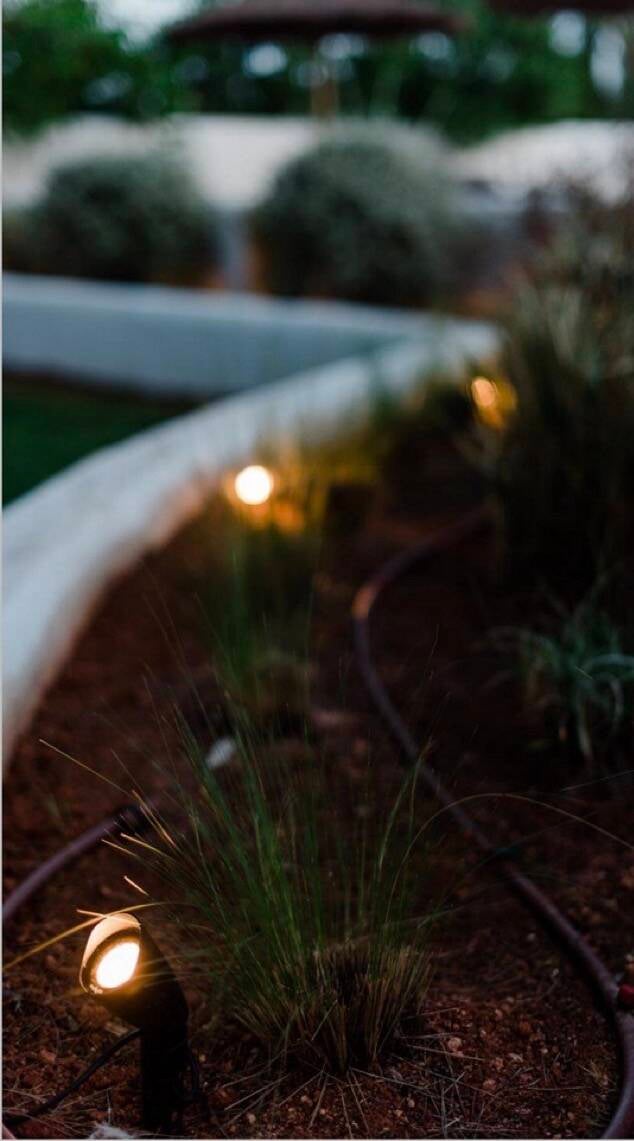
But installing garden lighting is not simply about adding as many lights as possible.
Poor positioning, the wrong colour temperature, too much light or badly planned cabling can make an otherwise beautiful garden feel flat, overly bright or uncomfortable.
Whether you are designing a new outdoor lighting system or improving an existing one, here are 10 common garden lighting mistakes and how to avoid them.
1. Using too many lights
One of the most common mistakes is thinking that more lights automatically mean a better result.
It is usually the opposite.
A well designed garden lighting system creates contrast between light and shadow. Not every plant, wall or corner needs to be illuminated.
Instead of lighting everything, choose the features you want to highlight.
A beautiful tree, architectural wall, entrance, pathway or planting area can often have a much greater visual impact when it is carefully illuminated.
The solution: Start with the key features of your garden and add lighting where it creates a purpose or a visual focal point.
For smaller features, a compact garden spotlight can be enough. For larger trees or architectural elements, a more powerful spotlight with the right beam angle may be more suitable.
2. Placing every light at the same distance
Perfectly equal spacing may look good on a drawing, but it does not always create the best result in a real garden.
Plants, trees, walls and pathways are all different. Their size, height and shape should influence where you position your lights.
For example, placing three spotlights exactly two metres apart does not necessarily make sense if one light is illuminating a small plant while another is supposed to illuminate a large tree.
The solution: Position each light according to the object you want to illuminate.
Think about the height, width and distance of the object before deciding where the light should go.
3. Only shining lights downwards
Garden lighting is often installed at ground level and pointed downwards.
This can provide useful pathway lighting, but it misses many of the opportunities available in a garden.
Lighting from below can create beautiful effects on trees, plants, walls and architectural features.
A tree illuminated from underneath can become a dramatic focal point, while a wall can create depth and structure in the garden.
The solution: Use a combination of lighting directions.
Use downward lighting where you need functional illumination, and upward or angled lighting to highlight features.
Products such as the SUS Small Calla 24V can be used to create focused lighting effects on plants, trees and architectural features.
4. Choosing the wrong colour temperature
Colour temperature has a huge influence on how your garden feels at night.
Cool white light can look clean and modern, but it can also feel harsh in a garden environment.
Warm white lighting generally creates a softer and more natural atmosphere, particularly around terraces, plants, trees and outdoor living areas.
For many residential gardens, around 2700K provides a warm and comfortable appearance.
The solution: Think about the atmosphere you want to create before choosing your lights.
Warm lighting works particularly well when you want your garden to feel inviting, elegant and relaxing.
When planning your system, look for garden lights with a consistent colour temperature so that different areas of the garden do not look noticeably different.
5. Using the wrong cable for the installation
A beautiful lighting design can quickly become a frustrating installation if the electrical system has not been planned properly.
Cable length, power consumption, voltage drop and the number of lights all need to be considered when designing a low voltage garden lighting system.
This is particularly important with larger gardens or installations with long cable runs.
The solution: Plan your cable routes before installing the lights and choose the correct cable and transformer for the total system.
A 24V garden lighting system can make installation and expansion much easier when it is designed correctly.
SmartGardenXL offers 24V cables and accessories that can be used to create a clean and expandable outdoor lighting system.
6. Forgetting that plants and trees grow
Your garden will not look exactly the same next year as it does today.
Trees grow. Plants become larger. Borders become fuller.
A light that looks perfectly positioned today may eventually be hidden by foliage or produce a completely different lighting effect.
The solution: Think about the future when positioning your garden lights.
Leave enough space around growing plants and consider how the light will interact with the garden as it develops.
This is especially important when lighting trees and large plants.
7. Only lighting the terrace
The terrace is often the first place people think about when installing garden lighting.
It is where you sit, eat and relax, so that makes sense.
But if the terrace is brightly illuminated while the rest of the garden disappears into darkness, the outdoor space can actually feel smaller.
The solution: Create layers of light throughout the garden.
Combine terrace lighting with subtle illumination of plants, trees, pathways, walls and other garden features.
This creates depth and allows you to enjoy the entire garden rather than just the area immediately around the seating.
8. Removing all the darkness
It may sound strange, but darkness is an important part of good garden lighting.
If every corner of the garden is illuminated, there is no contrast and no sense of depth.
The result can feel more like a brightly lit commercial space than a relaxing garden.
The solution: Allow some areas to remain dark.
Use light selectively and let shadows become part of the design.
The goal is not to make the entire garden as bright as possible. The goal is to create the right atmosphere.
9. Positioning lights where they shine directly into your eyes
A garden light can look beautiful from one angle and be extremely uncomfortable from another.
This happens when a bright light source is visible from seating areas, windows, pathways or neighbouring properties.
Instead of seeing the garden, you end up seeing the lamp.
The solution: Think about where people will be when positioning each light.
Try to hide or shield the light source where possible and direct the light towards the feature rather than towards people’s eyes.
This is particularly important around patios, seating areas and walkways.
A well positioned spotlight should make you notice what it illuminates, not the light source itself.
10. Starting without a lighting plan
Perhaps the biggest mistake is buying a collection of lights and deciding where to put them afterwards.
Without a plan, you can easily end up with too many lights in one area, insufficient cable, unnecessary connections or a garden that lacks visual balance.
The solution: Plan your garden lighting before you start installing anything.
Start by making a simple sketch of your garden.
Mark:
• The house and outdoor walls.
• Terraces and seating areas.
• Pathways.
• Trees and large plants.
• Borders.
• Driveways and entrances.
• Swimming pools or water features.
Then decide which elements you want to highlight.
Only after that should you decide how many lights you need and where they should be positioned.
The key to beautiful garden lighting
Great garden lighting is not about making everything bright.
It is about creating balance.
Use different levels of light, combine functional and atmospheric lighting, choose the right colour temperature and carefully position every light.
A well planned 24V outdoor lighting system also makes it easier to expand or adapt your garden lighting as your garden changes.
At SmartGardenXL, we focus on premium outdoor lighting designed to make gardens look as beautiful at night as they do during the day.
From subtle pathway lighting to powerful spotlights for trees and architectural features, the right combination can completely change the way you experience your outdoor space.
Plan the lighting. Highlight what matters. Let the garden do the rest.